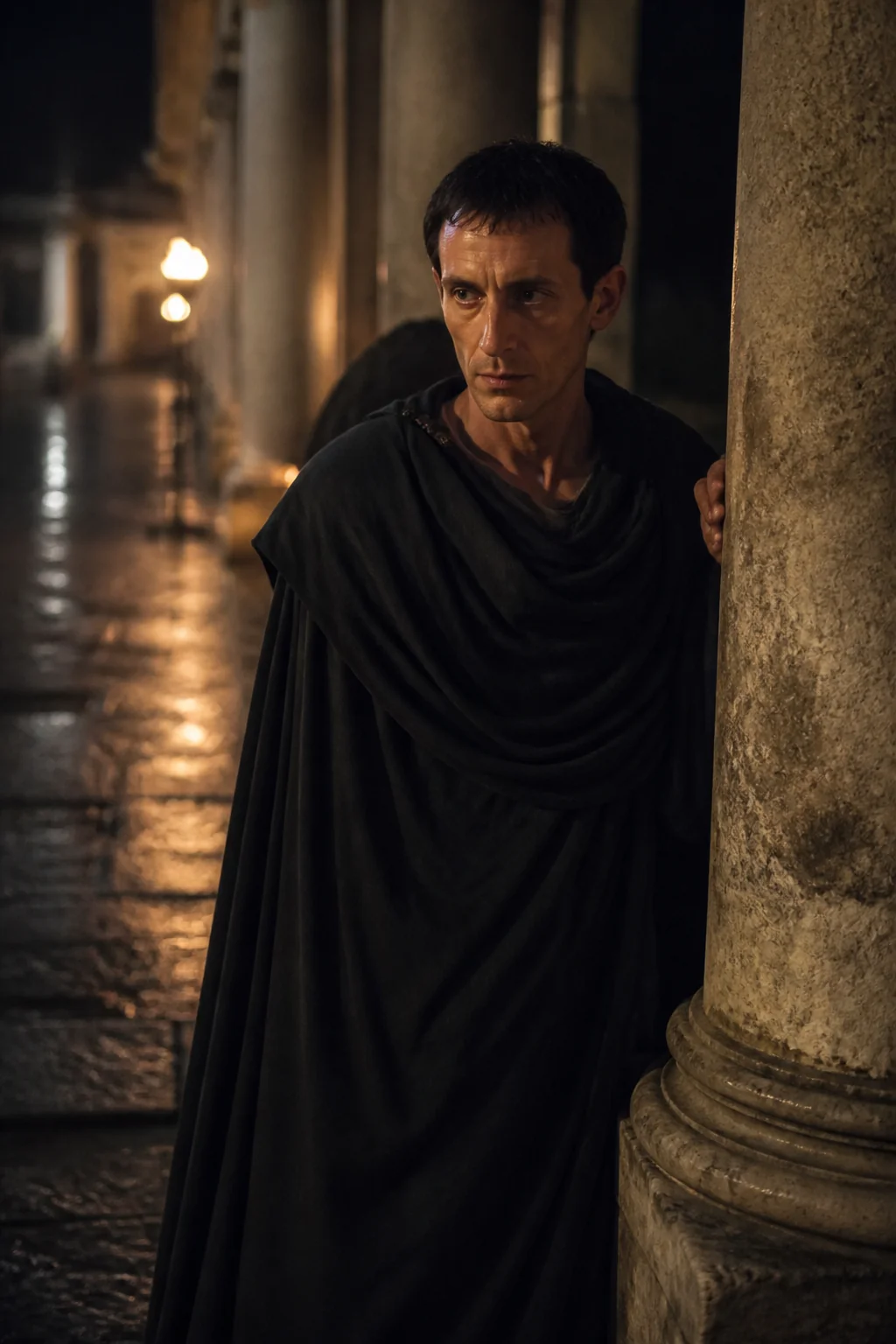
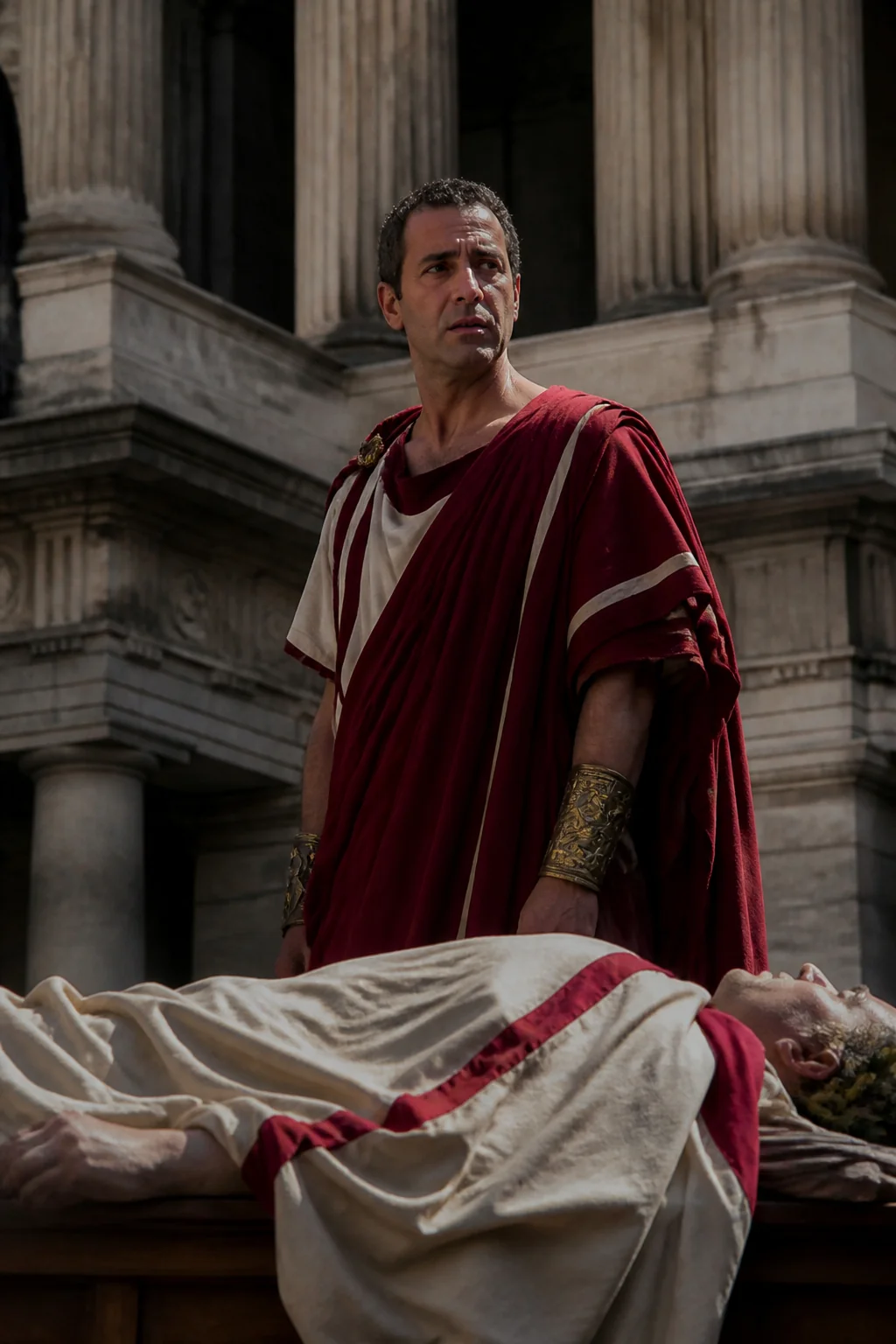
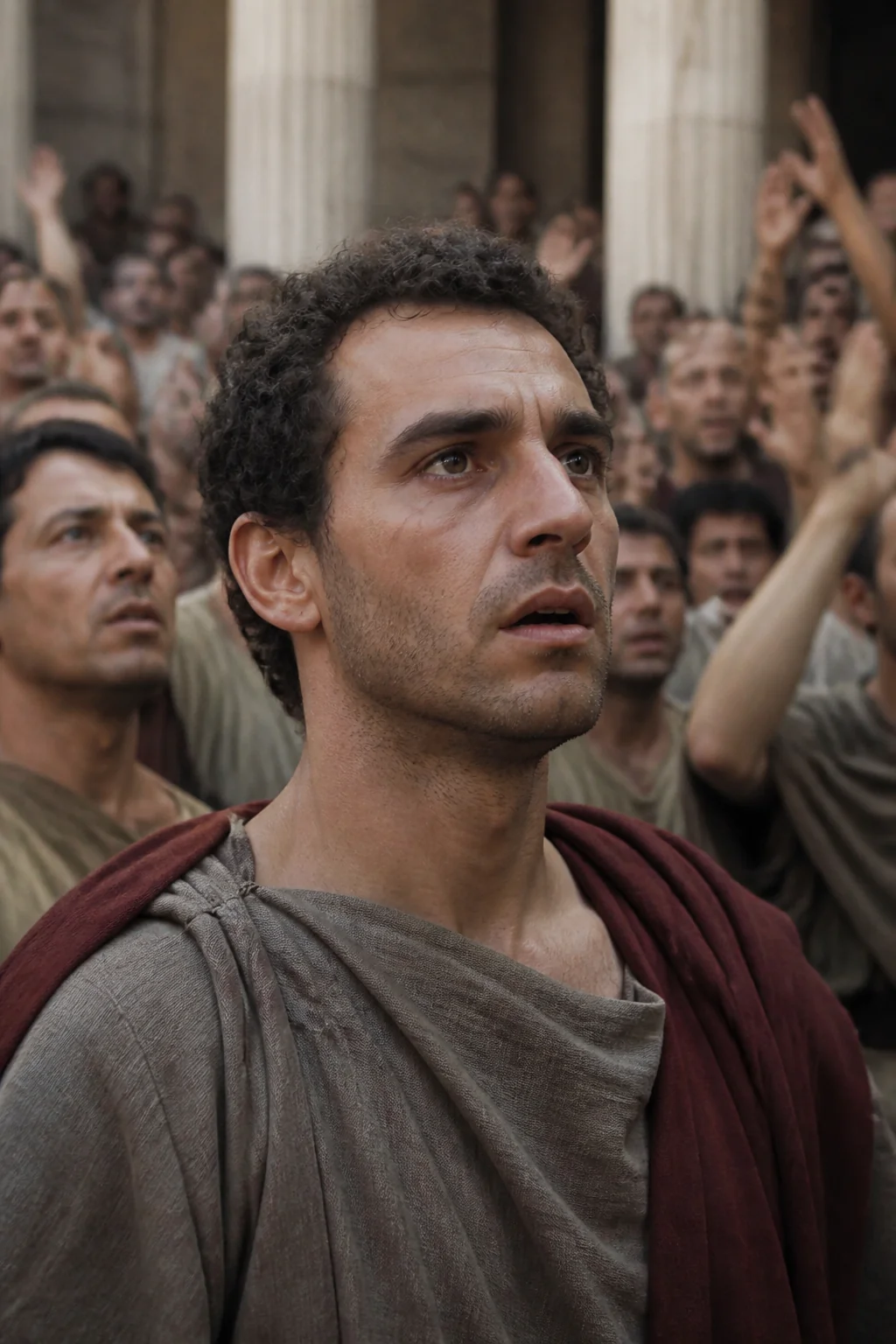
The film without the cuts. And the book itself.
A conquering hero returns to cheering crowds, and two men start counting who else is afraid.
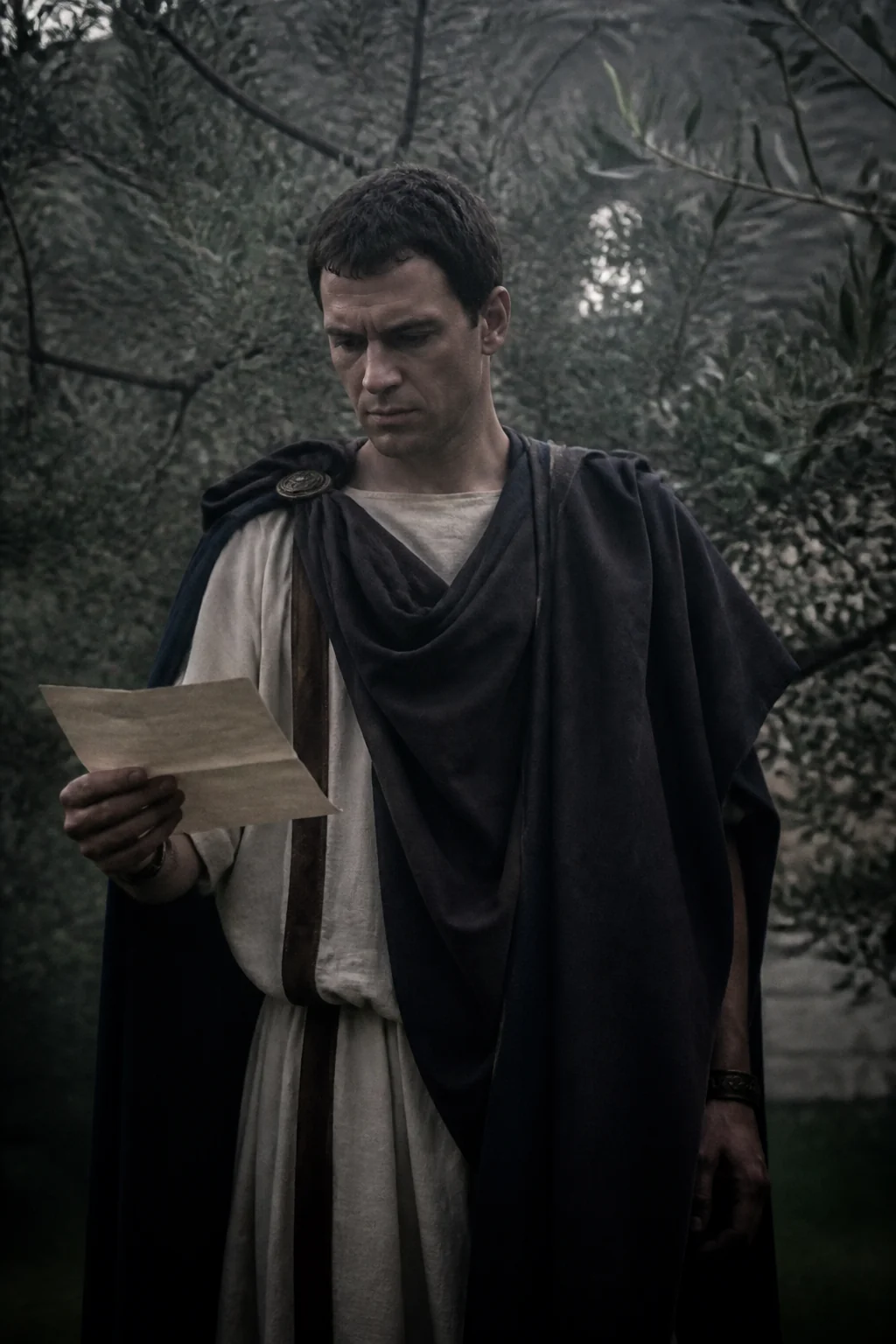
Marcus Brutus
A sleepless Roman nobleman turns a private fear into a public killing.

Rome’s streets
Festival torches, thunder, and the cries of a killing mob all pass down the same street.
Rome cheers a new victor, but Marullus demands loyalty to Pompey's memory.
Read →Triumph Over Pompeys Blood
MARULLUS. Wherefore rejoice? What conquest brings he home? What tributaries follow him to Rome, To grace in captive bonds his chariot wheels? You blocks, you stones, you worse than senseless things! O you hard hearts, you cruel men of Rome, Knew you not Pompey? Many a time and oft Have you climb’d up to walls and battlements, To towers and windows, yea, to chimney tops, Your infants in your arms, and there have sat The livelong day with patient expectation, To see great Pompey pass the streets of Rome. And when you saw his chariot but appear, Have you not made an universal shout, That Tiber trembled underneath her banks To hear the replication of your sounds Made in her concave shores? And do you now put on your best attire? And do you now cull out a holiday? And do you now strew flowers in his way, That comes in triumph over Pompey’s blood? Be gone! Run to your houses, fall upon your knees, Pray to the gods to intermit the plague That needs must light on this ingratitude.
A Roman triumph was supposed to parade foreign captives, and Marullus opens by pointing out there are none: "What tributaries follow him to Rome, / To grace in captive bonds his chariot wheels?" Caesar has beaten fellow Romans, so this parade celebrates a civil war, not a conquest. This is the crowd Marullus, a tribune, has caught taking a holiday to cheer Caesar's return. He then does something crueler than simple insult: he forces them to remember their own past joy, the whole day spent waiting with their children just to see Pompey pass, and turns it against the man who now "comes in triumph over Pompey's blood."
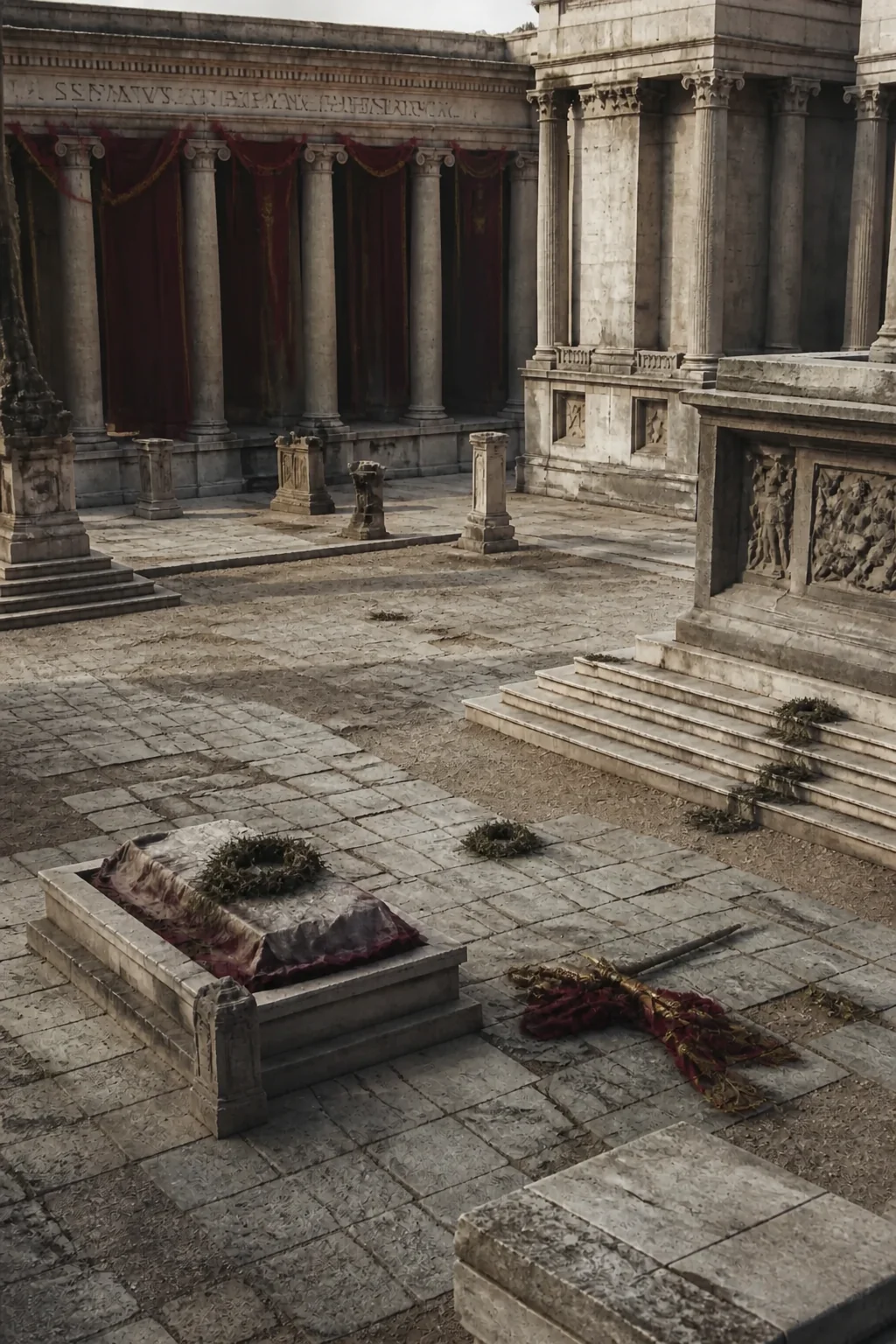
Rome Uneasy With Its Own Greatness
A conquering hero returns to cheering crowds, and two men start counting who else is afraid.
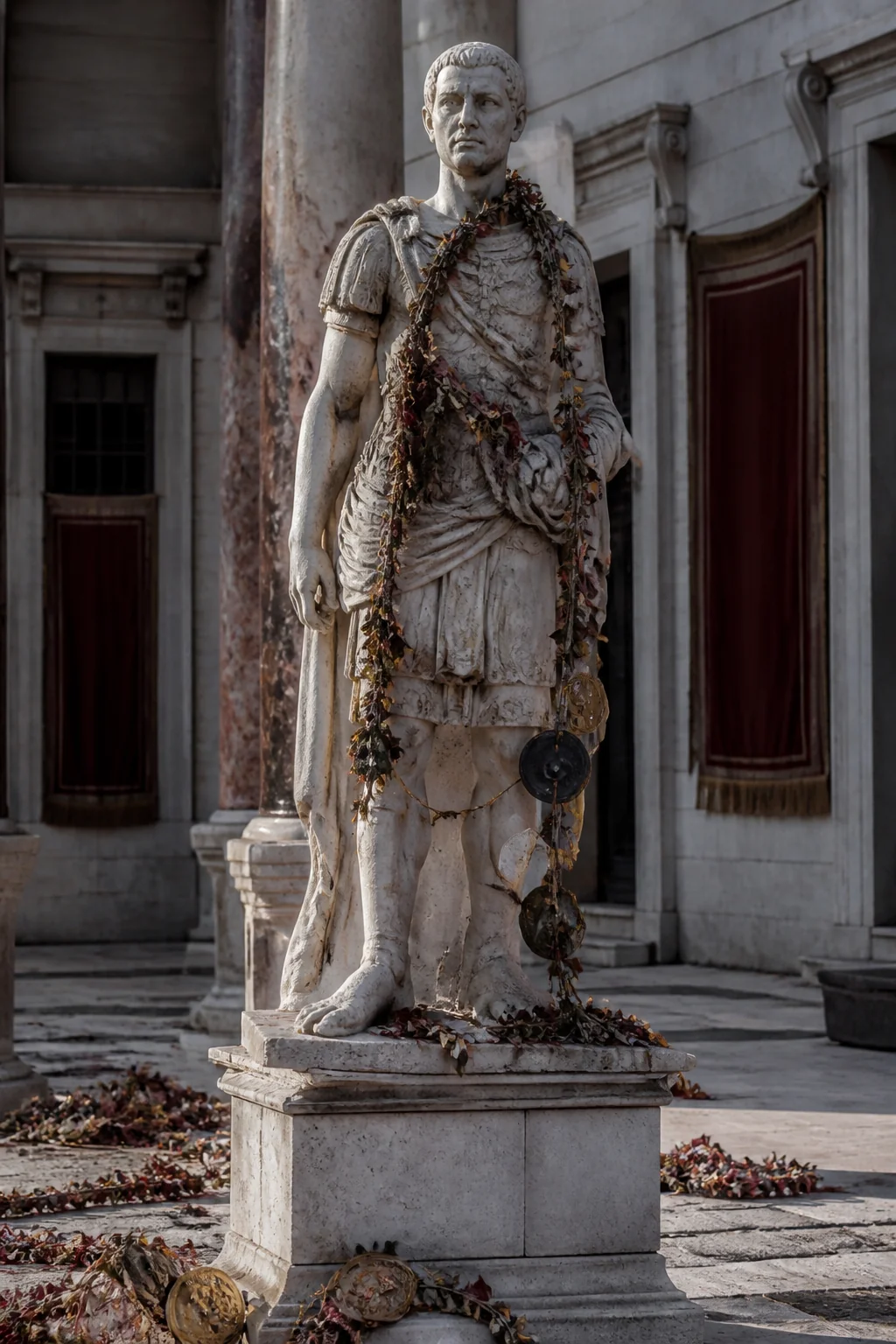
Caesar’s trophies and decorated images
Garlands crown Caesar's statues until two tribunes decide the celebration has gone too far.
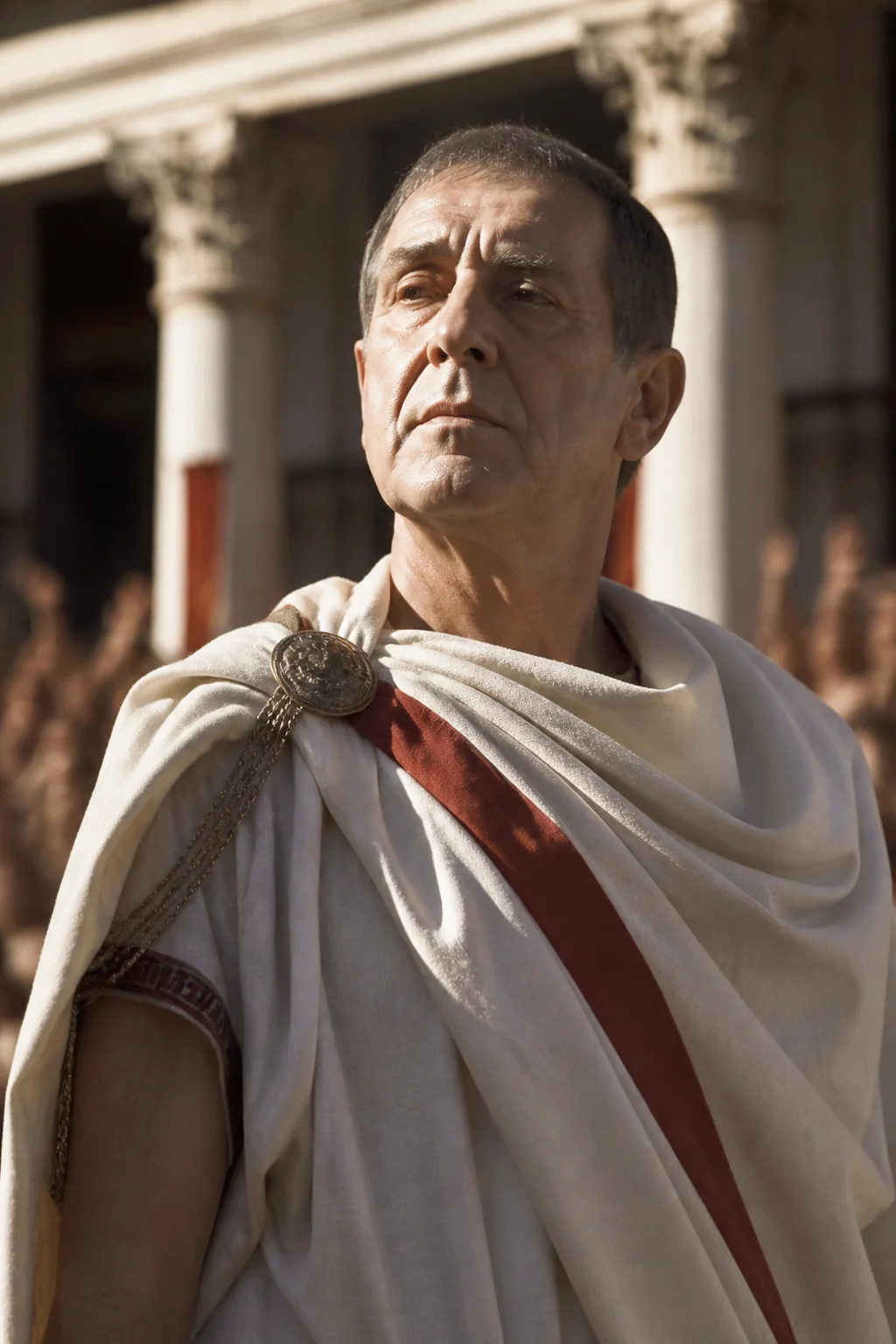
Julius Caesar
A public man dismisses warnings until his body becomes Rome’s most powerful sign.
Julius Caesar
The cast, locations, objects of note, core concepts, and selected passages in the Author’s Pen - at your own pace.
The Julius Caesar World, as it plays on your phone
- Meet the people. 35 characters, each with a portrait, who they are and what they want.
- Walk the places. 13 places, each pictured, and what happens there.
- Follow the plot. The turns of the story, in order, so you always know where you are.
- Taste the original. 47 key passages in William Shakespeare’s own words, each with a short reading of what it is doing.
- The complete book. Every word, in a reader made for your phone. From any passage, one tap opens the book at that very page.
Step inside Julius Caesar
Free, in your inbox in about a minute: the World and the complete book, on your phone.