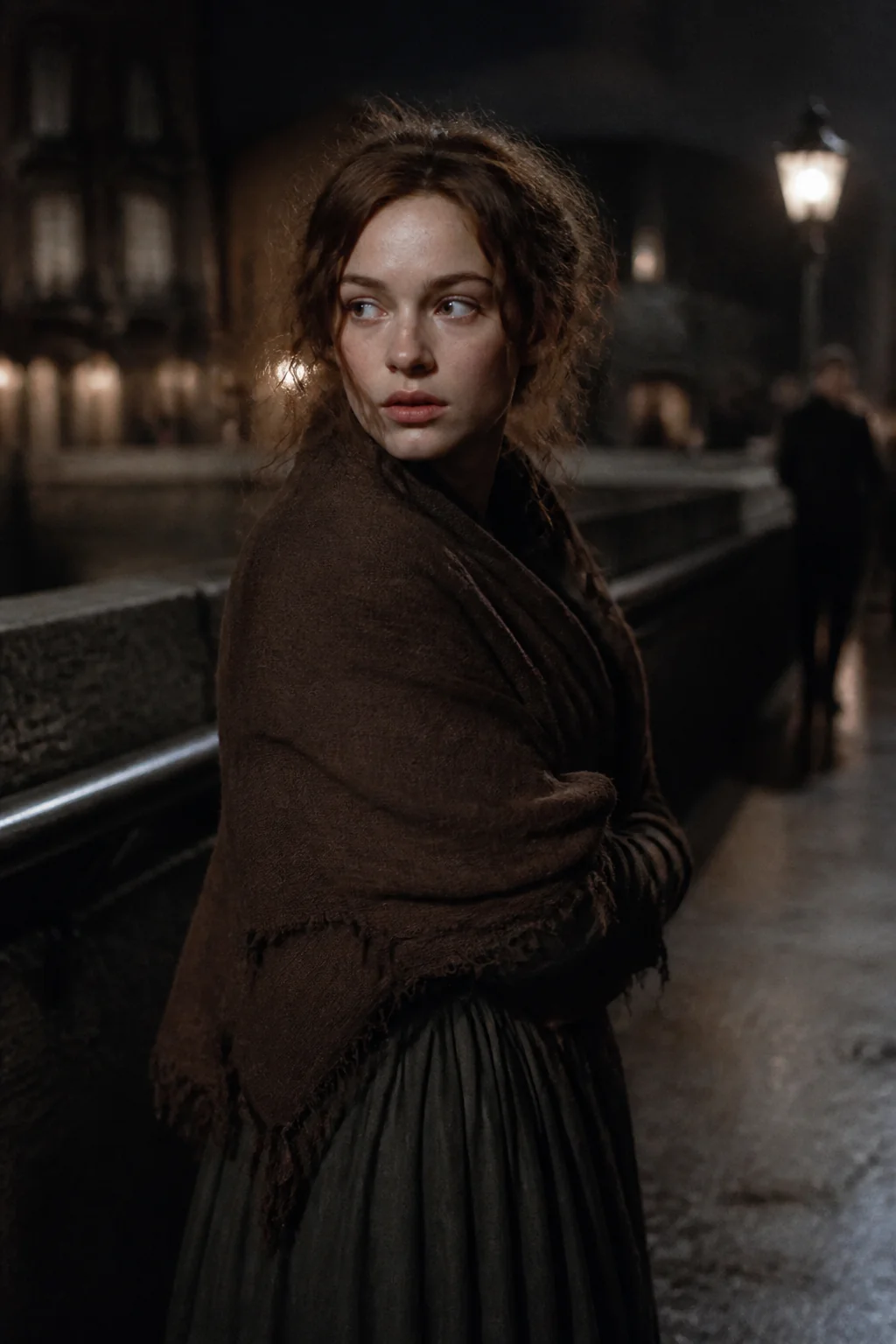
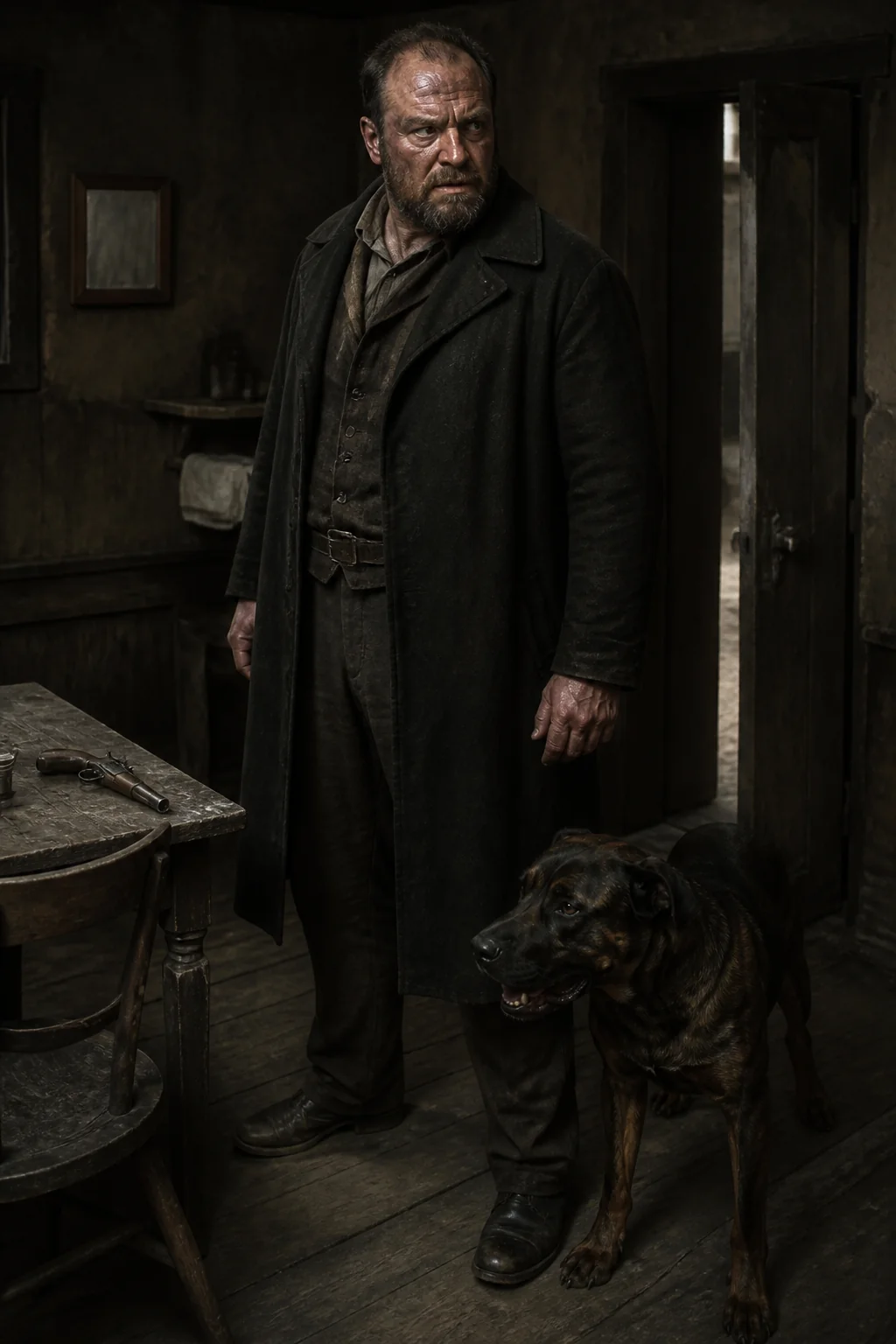
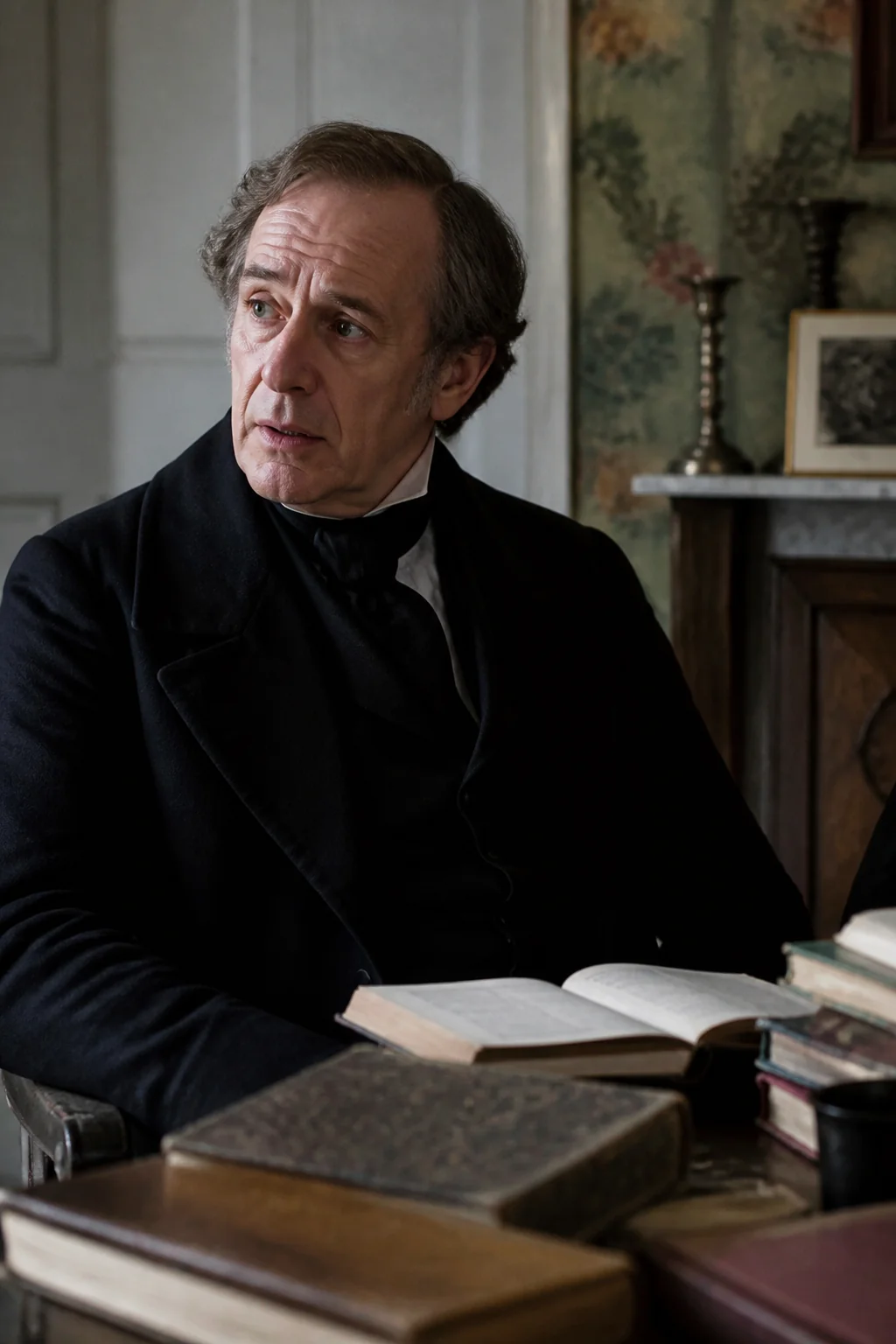
The film without the cuts. And the book itself.
Please, sir, I want some more.
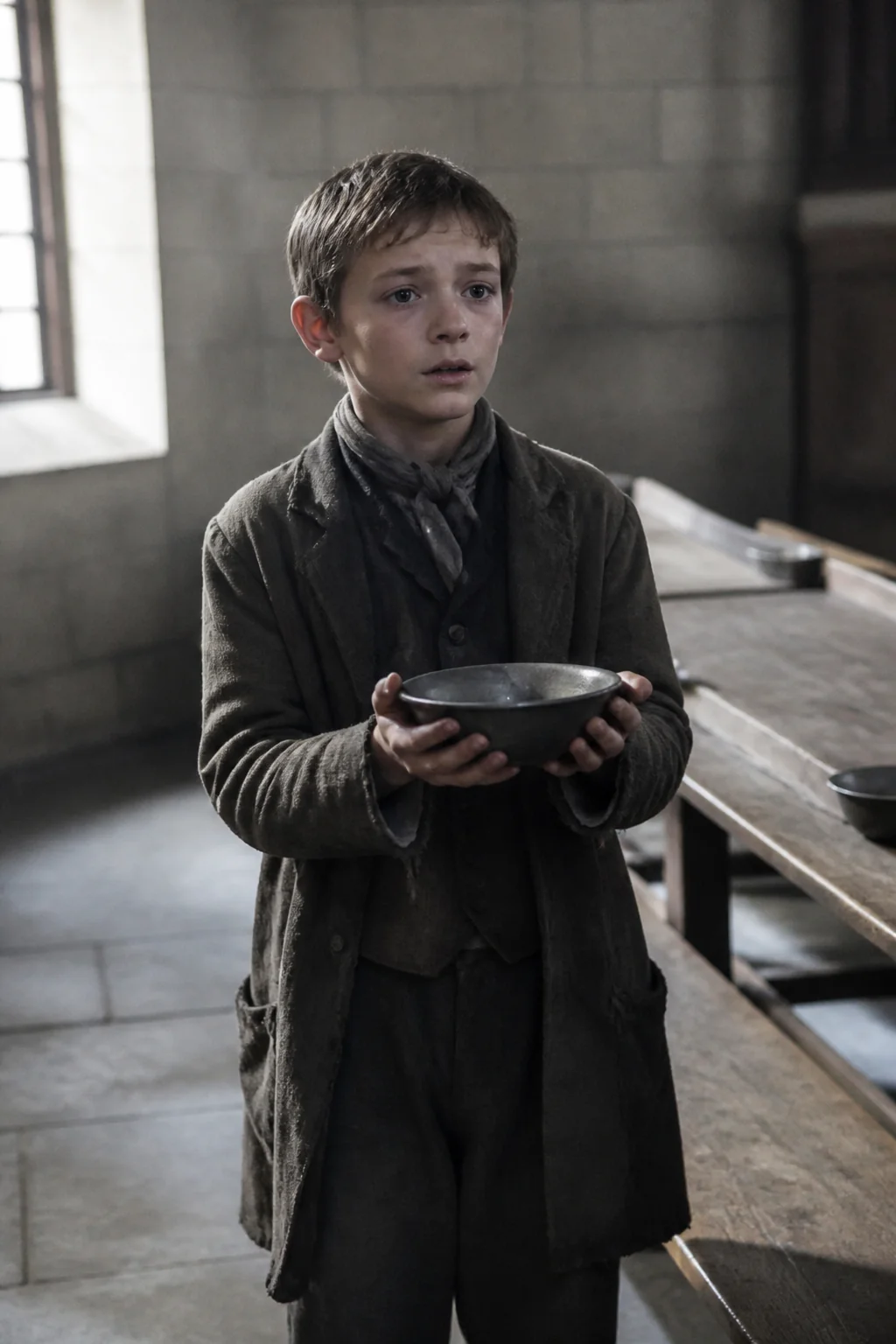
Oliver Twist
A hungry orphan whose request for more exposes the cruelty around him.
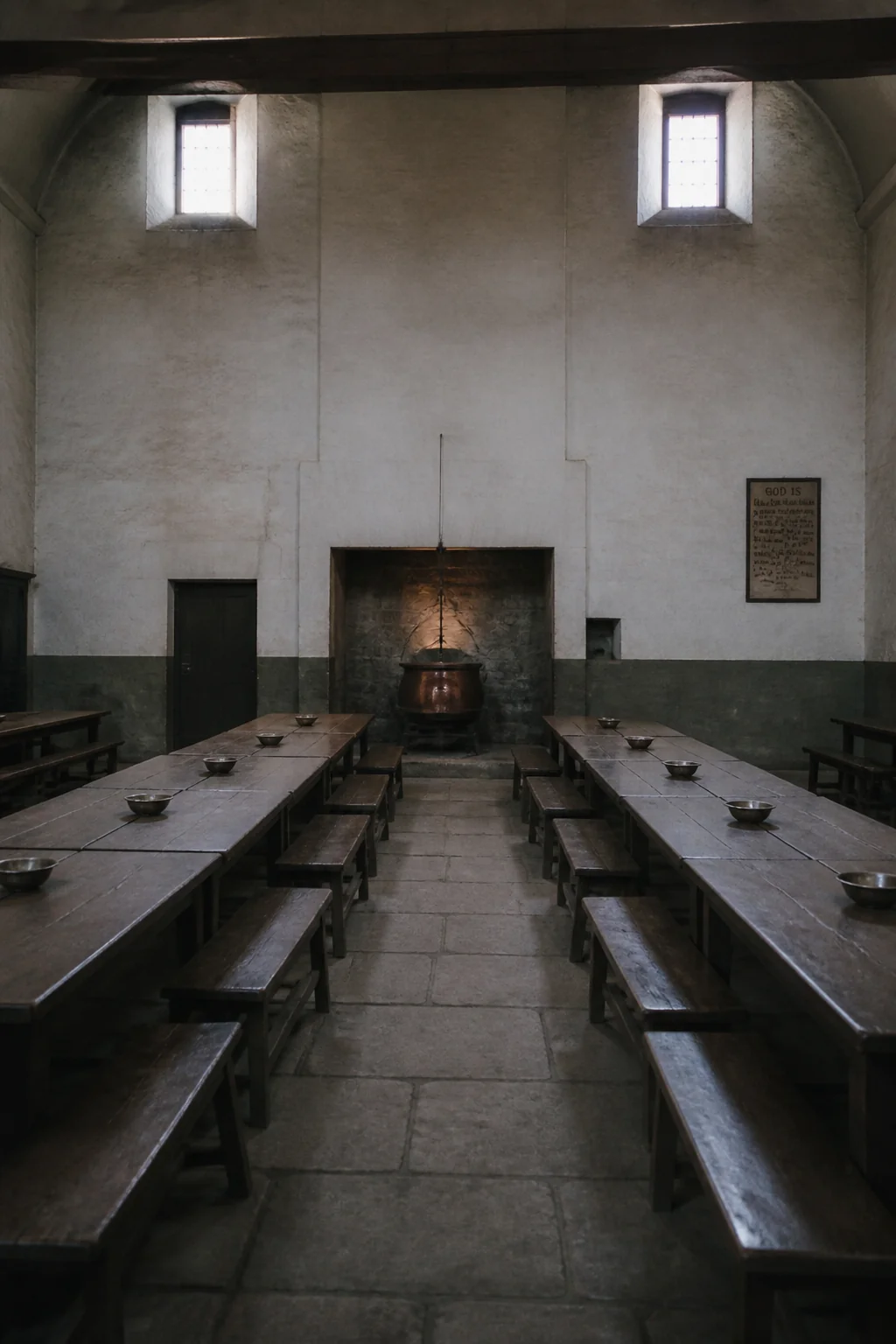
The Workhouse
A clean, respectable house where children are kept hungry on purpose.
Oliver's first breath arrives as a cruel irony, saving him for hardship.
Read →Oliver's First Cry
Although I am not disposed to maintain that being born in a workhouse, is in itself the most fortunate and enviable circumstance that can possibly befall a human being, I do mean to say that in this particular instance, it was the best thing for Oliver Twist that could by possibility have occurred. The fact is, that there was considerable difficulty in inducing Oliver to take upon himself the office of respiration,—a troublesome practice, but one which custom has rendered necessary to our easy existence; and for some time he lay gasping on a little flock mattress, rather unequally poised between this world and the next: the balance being decidedly in favour of the latter. Now, if, during this brief period, Oliver had been surrounded by careful grandmothers, anxious aunts, experienced nurses, and doctors of profound wisdom, he would most inevitably and indubitably have been killed in no time. There being nobody by, however, but a pauper old woman, who was rendered rather misty by an unwonted allowance of beer; and a parish surgeon who did such matters by contract; Oliver and Nature fought out the point between them. The result was, that, after a few struggles, Oliver breathed, sneezed, and proceeded to advertise to the inmates of the workhouse the fact of a new burden having been imposed upon the parish, by setting up as loud a cry as could reasonably have been expected from a male infant who had not been possessed of that very useful appendage, a voice, for a much longer space of time than three minutes and a quarter.
As Oliver gave this first proof of the free and proper action of his lungs, the patchwork coverlet which was carelessly flung over the iron bedstead, rustled; the pale face of a young woman was raised feebly from the pillow; and a faint voice imperfectly articulated the words, “Let me see the child, and die.”
Dickens turns Oliver's survival into a joke at the expense of respectable care: had the baby been fussed over by wise doctors and anxious relatives, the narrator insists, he would surely have died, and only neglect saved him. It is a bleak sort of comedy, since the reason nobody bothers is that a workhouse infant is just a new cost to the parish, another mouth the ratepayers must feed. The narrator treats breathing itself as an achievement wrung out of a reluctant child fighting Nature alone. Then the mockery drops, the mother lifts her head, and asks only to see the baby before she dies.
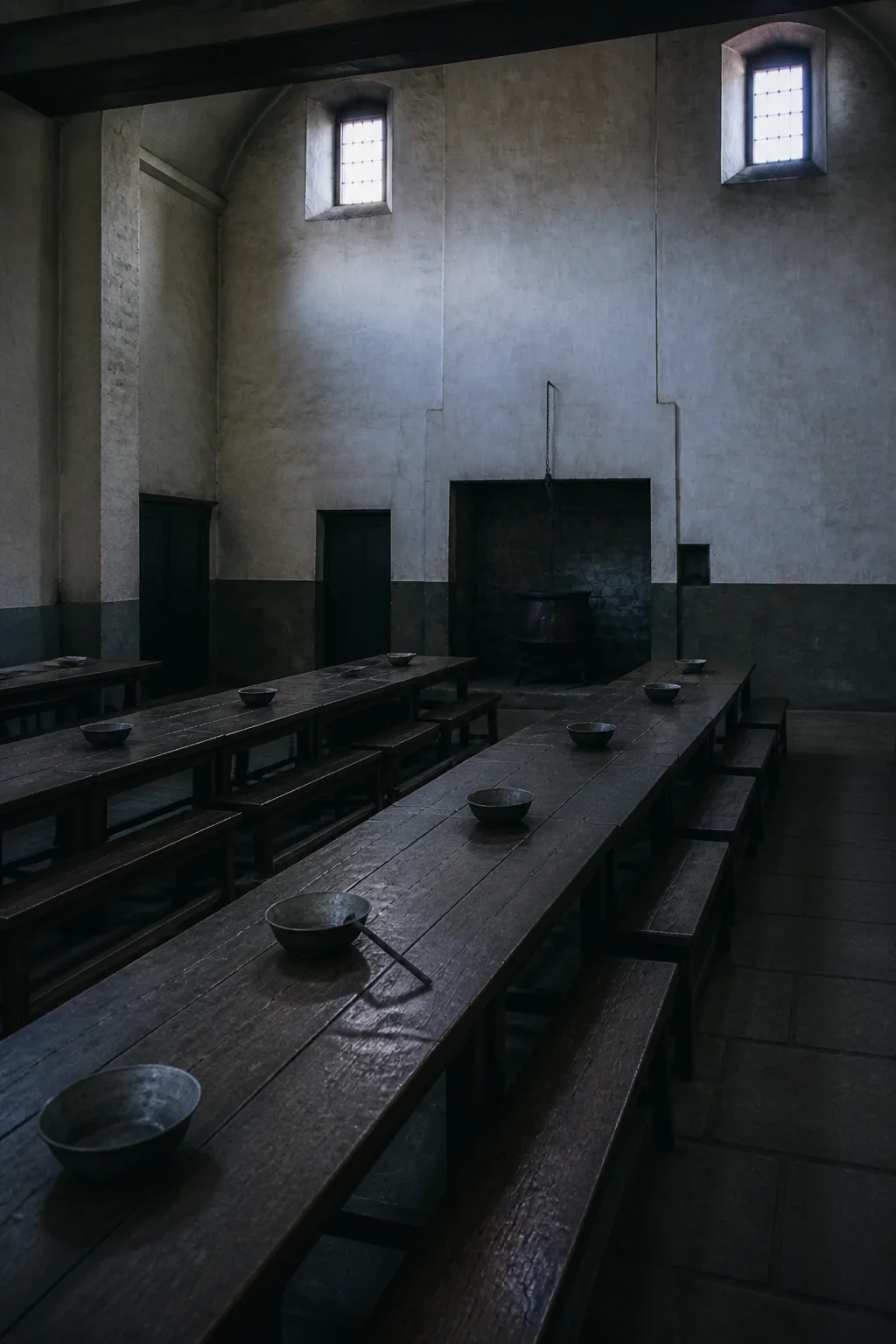
Oliver is born in the workhouse and asks for more
A child born without a name in a parish workhouse commits his first act of rebellion by holding out his bowl.
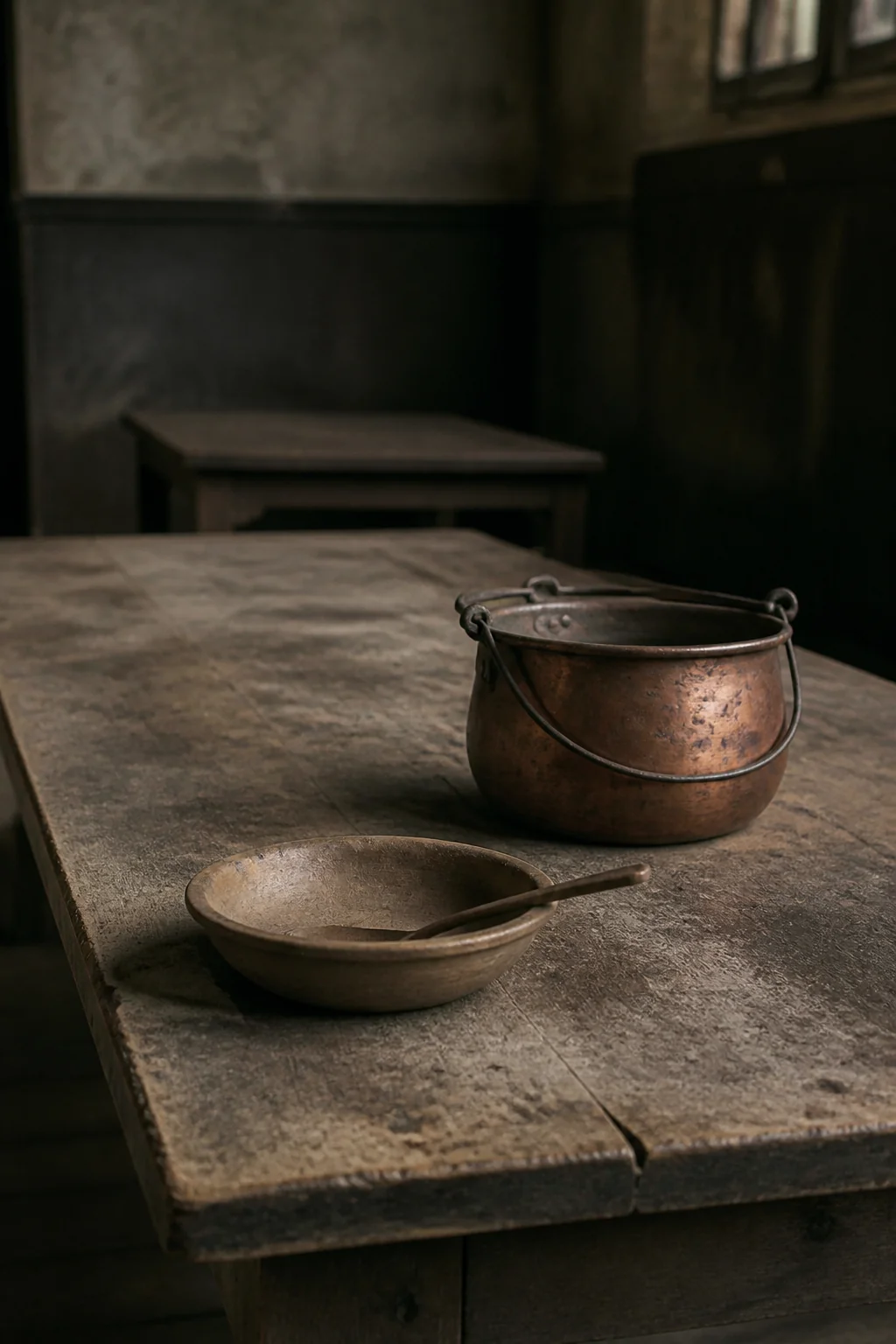
The Gruel Bowl
One empty bowl, one boy asking for more, and a room that treats it as treason.
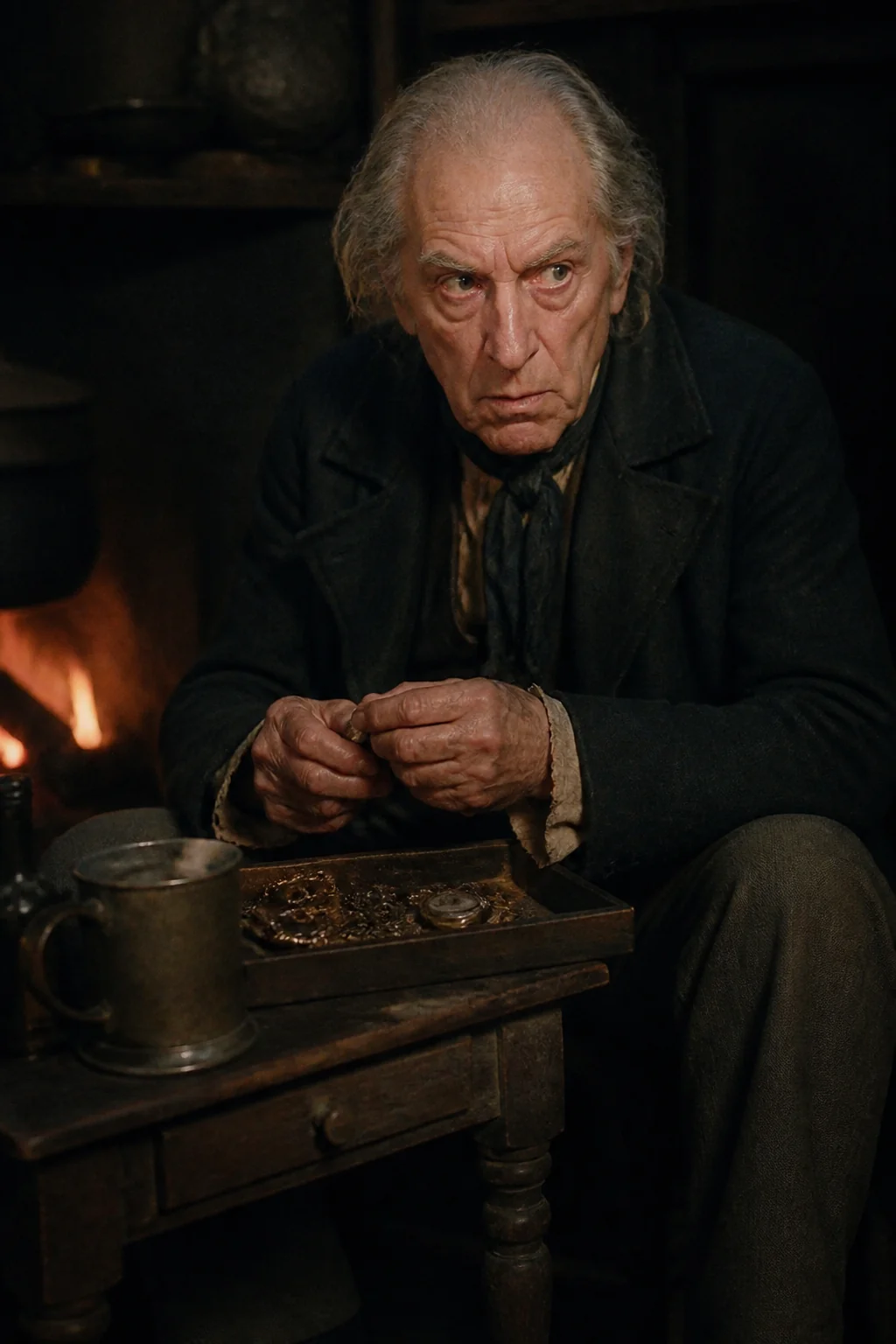
Fagin
An old receiver of stolen goods who turns shelter into training for theft.
Oliver Twist
The cast, locations, objects of note, core concepts, and selected passages in the Author’s Pen - at your own pace.
The Oliver Twist World, as it plays on your phone
- Meet the people. 28 characters, each with a portrait, who they are and what they want.
- Walk the places. 12 places, each pictured, and what happens there.
- Follow the plot. The turns of the story, in order, so you always know where you are.
- Taste the original. 40 key passages in Charles Dickens’s own words, each with a short reading of what it is doing.
- The complete book. Every word, in a reader made for your phone. From any passage, one tap opens the book at that very page.
Step inside Oliver Twist
Free, in your inbox in about a minute: the World and the complete book, on your phone.